AimGel Technology
A modular artificial cell platform

Biomimetic design
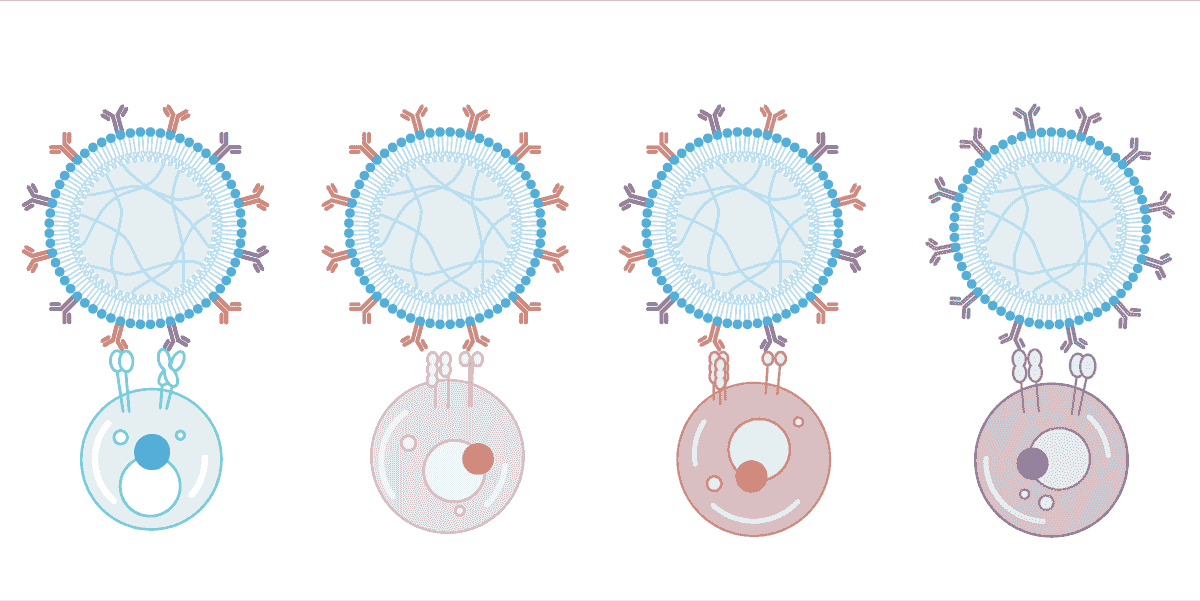
AimGel artificial cells are designed from the ground up to mimic natural antigen presenting cells (APCs). The soft hydrogel core replicates the mechanical stiffness and size (~7-12 µm) of real cells, while a mobile lipid bilayer coating allows activation signals to move freely across the surface, just as they would on a natural APC membrane.
This biomimetic design delivers measurable advantages: AimGel requires significantly fewer activation signals than rigid magnetic microplastic beads while achieving more effective yet gentler activation. The result is higher cell expansion, better viability, and reduced exhaustion, cells remain responsive and can be re-stimulated.
One platform, unlimited applications
AimGel's core advantage is its modular design. Degradation kinetics, bead size, and signal loading capacity are all chemically tuneable, giving you precise control over activation parameters. Load different signals for different experimental needs — currently optimised for T cell (human, mouse, dog) and NK cell activation, with a Treg solution coming soon.
The platform adapts to your research: adjust activation duration, coordinate with lentiviral transduction timing, or engineer entirely new signal combinations. One flexible platform, configured for your specific application.
Defined, consistent, compliant
AimGel is 100% synthetically derived with fully defined structures and ratios. No animal components means no batch-to-batch variability — just consistent, reproducible activation you can rely on for every experiment.

Fluid membrane
A fluid lipid coating mimicking the cell membrane enables cell-like interactions. Membrane is modified for signal attachment.

Hydrogel Core
A degradable hydrogel core with variable size and softness to mimic the texture of real cells.

Surface Signals
Easily swappable, optimised for your target cell type.
Conference Posters

ISCT Europe Conference 2024, Gothenburg, Sweden

Singapore Cell & Gene Therapy Pan Asia Summit 2024, Singapore

ISCT Annual Conference 2024, Vancouver, Canada