AimGel Human T Cell Activator
CD3/CD28/CD137 activation on cell-sized hydrogel microparticles
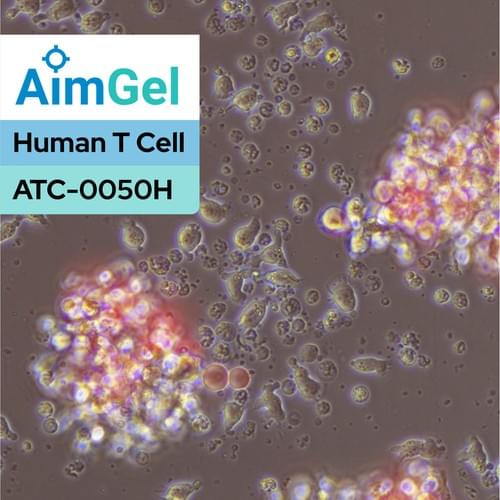
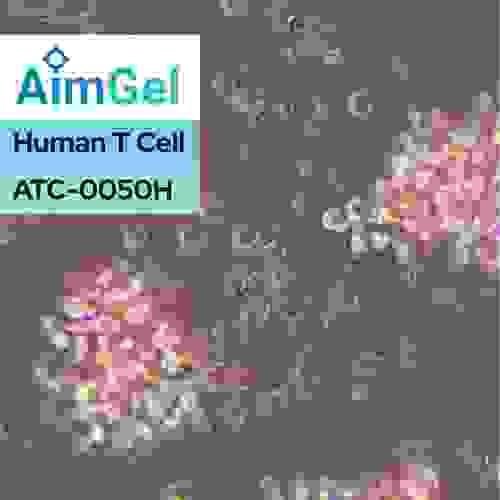
AimGel Human T Cell Activator
$150.00
ATC01-0050H | Research Use Only
AimGel Human T Cell Activator presents anti-CD3, anti-CD28 and anti-CD137 signals on soft hydrogel microparticles built to the size of a real cell (7-12 µm). The fluid lipid membrane lets those signals move freely across the surface, the way they do on a natural antigen-presenting cell — so activation is gentle and effective, whether you start from isolated T cells or straight from PBMC.
1 vial of AimGel Human T Cell Activator, 0.5 mL in PBS at 4 × 10⁷ microparticles/mLQuantityData
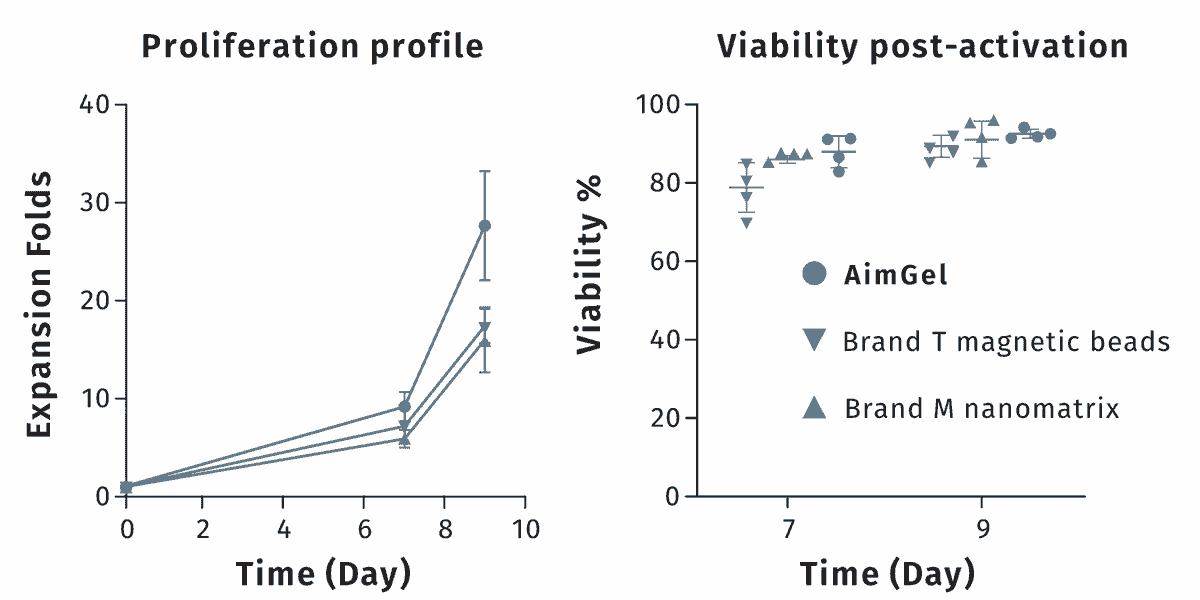
Proliferation and viability
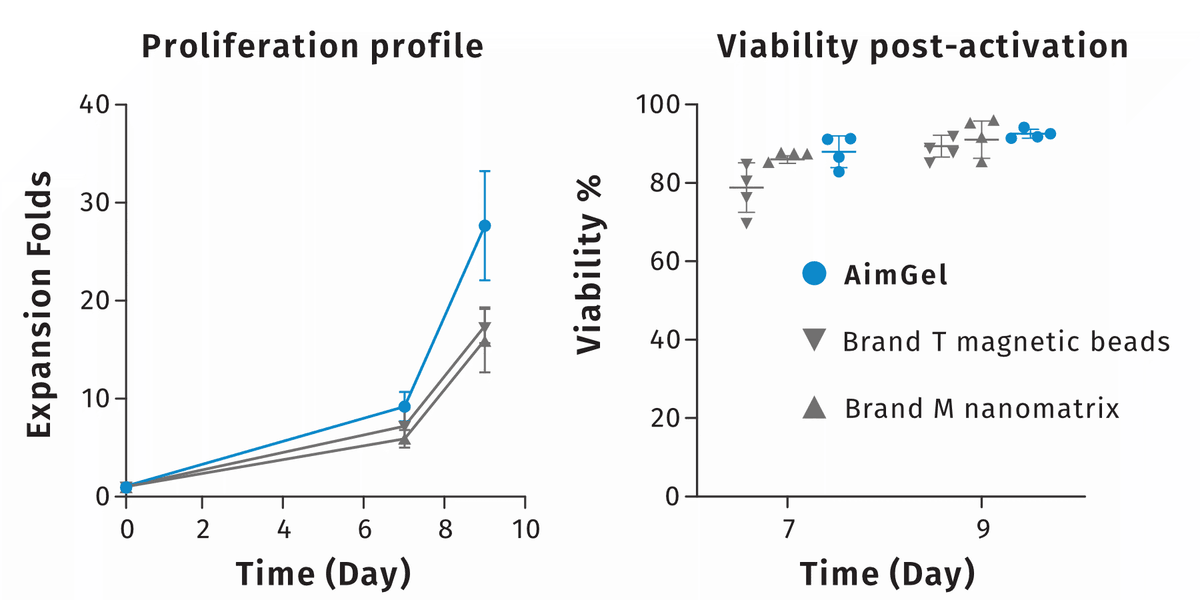
When expanding T cells straight from PBMC, AimGel outperforms existing activation solutions such as magnetic beads and nanomatrix by 60%, yielding more cells in a shorter time. Viability of T cells activated via AimGel matches current activation solutions. n=4, PBMCs from healthy human donors.
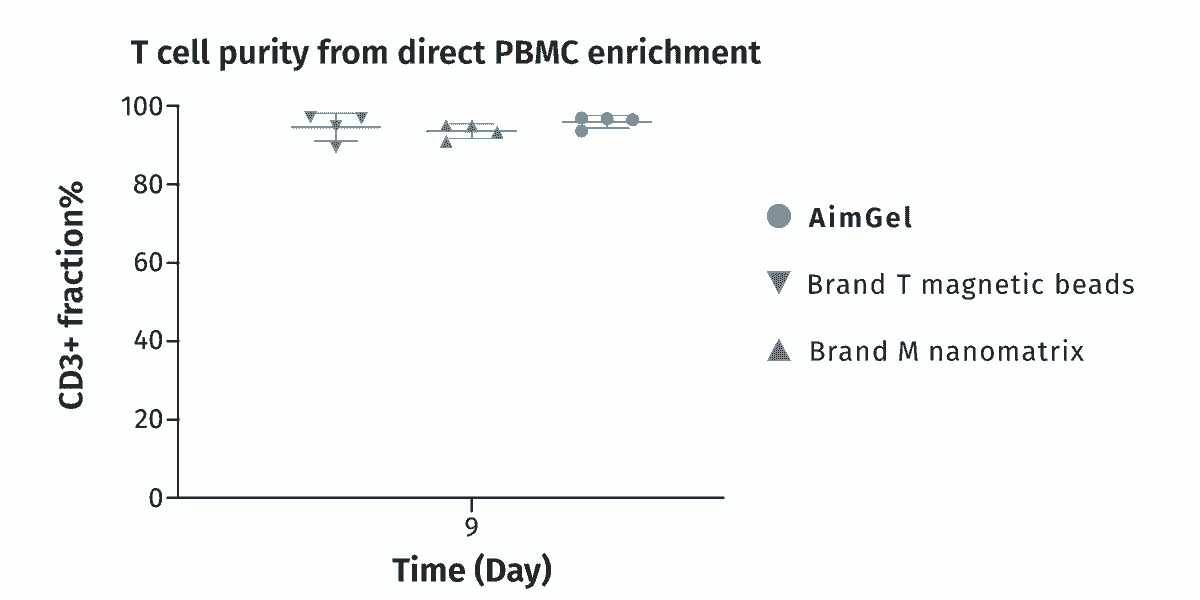
More cells, same purity
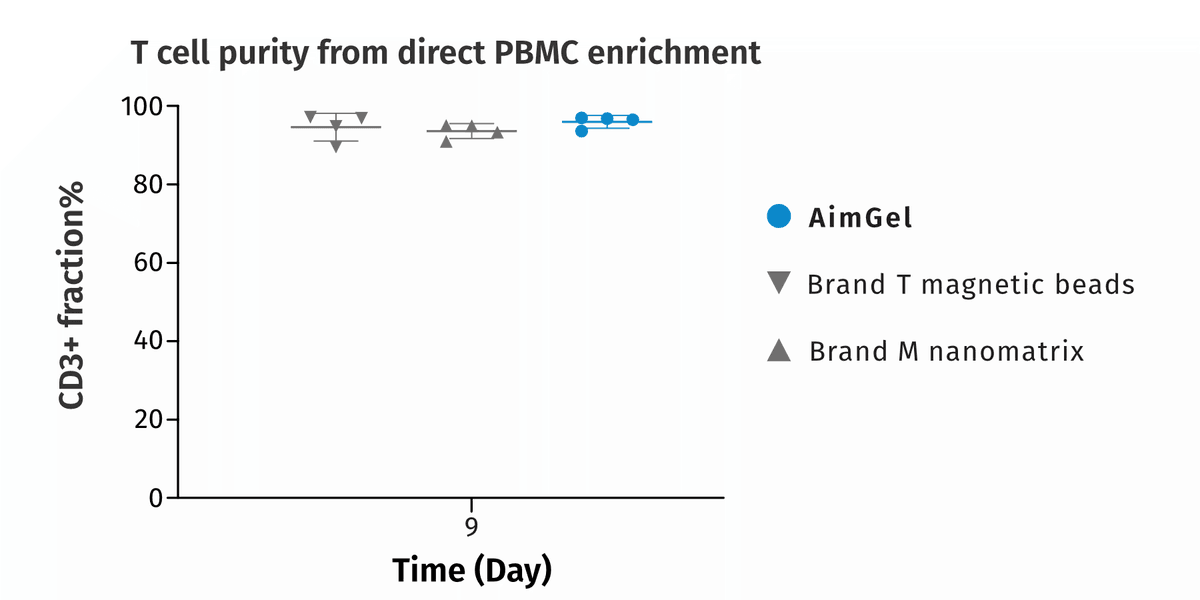
When enriching directly from PBMC with AimGel, you get more cells, but matching the high T cell purity (90%) of common activation solutions.
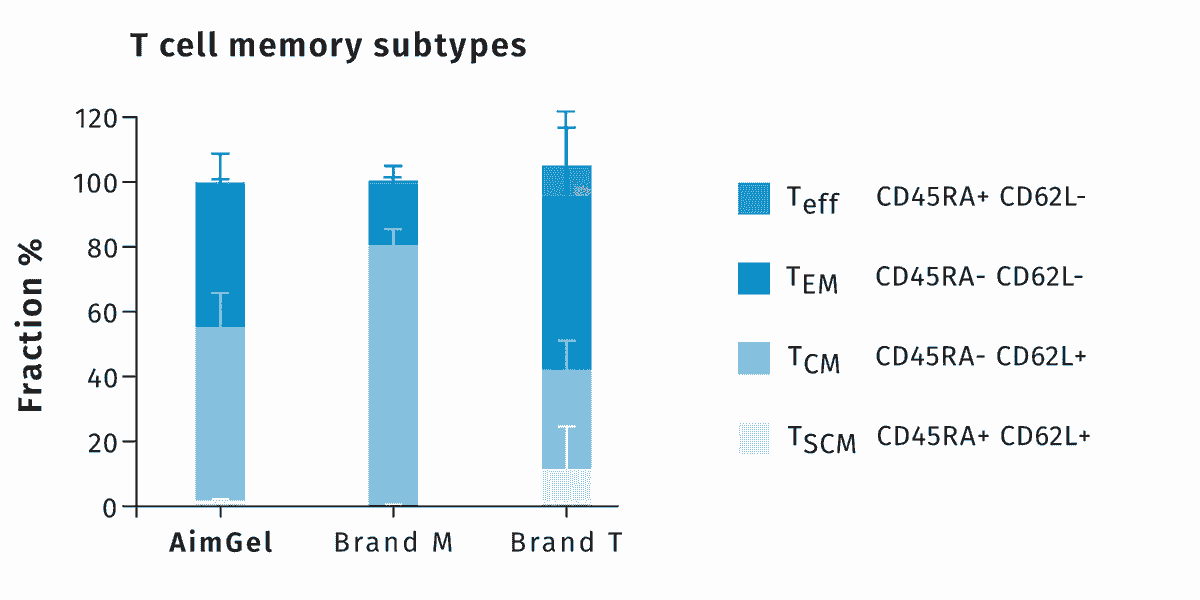
Memory subtypes
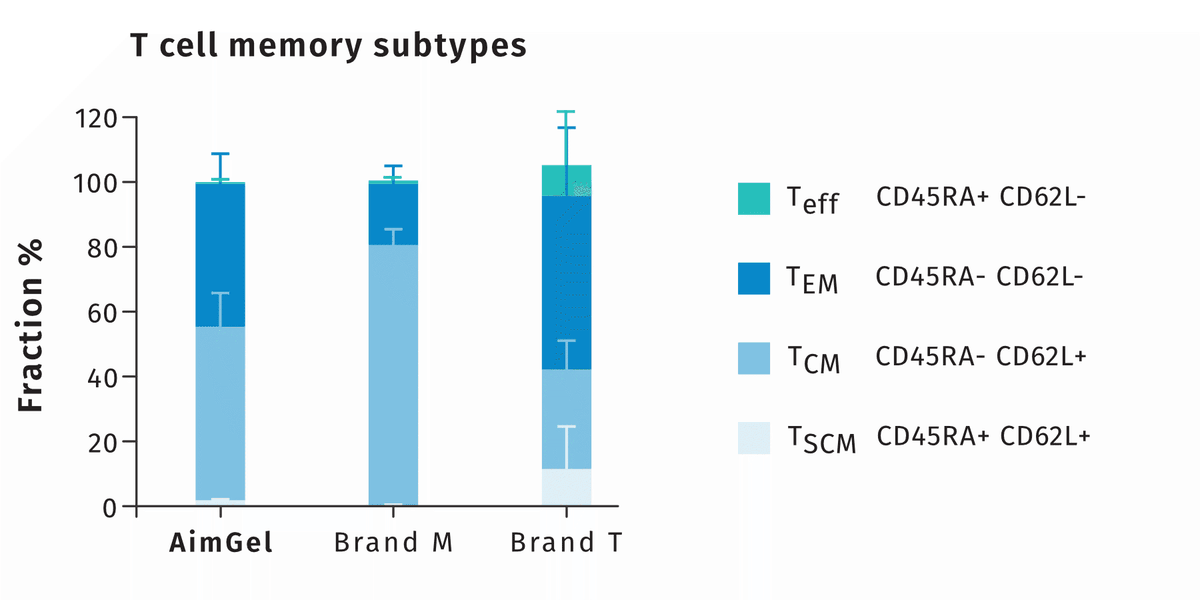
T cell memory subtypes of PBMCs activated by AimGel and other popular T cell activation reagents. AimGel produces more even fractions of effector memory and central memory subtypes.
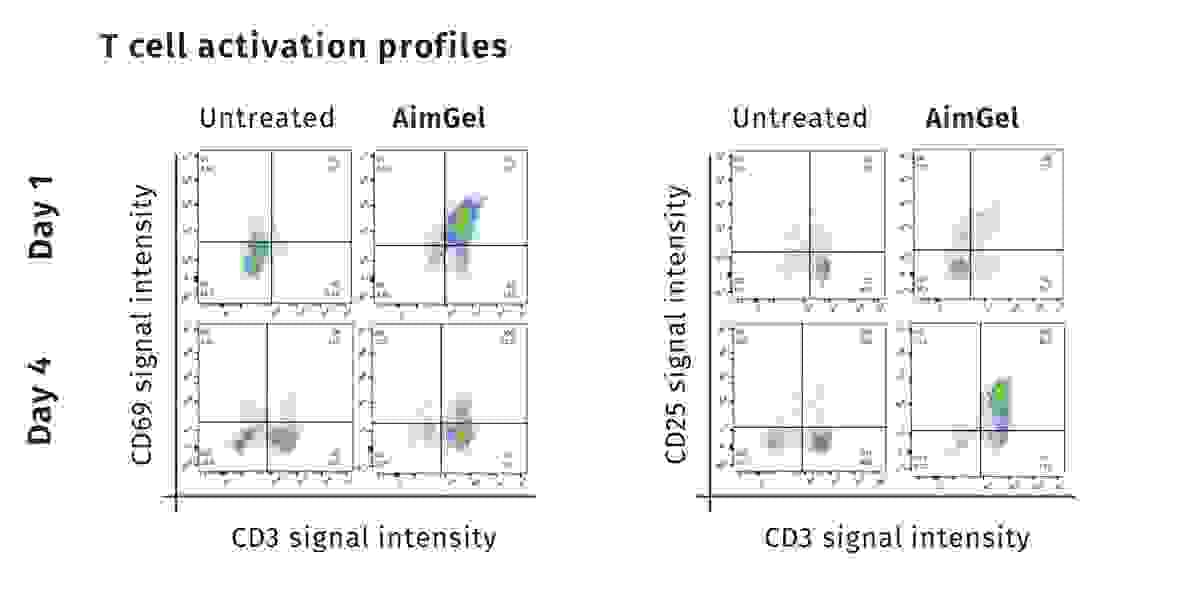
Activation markers
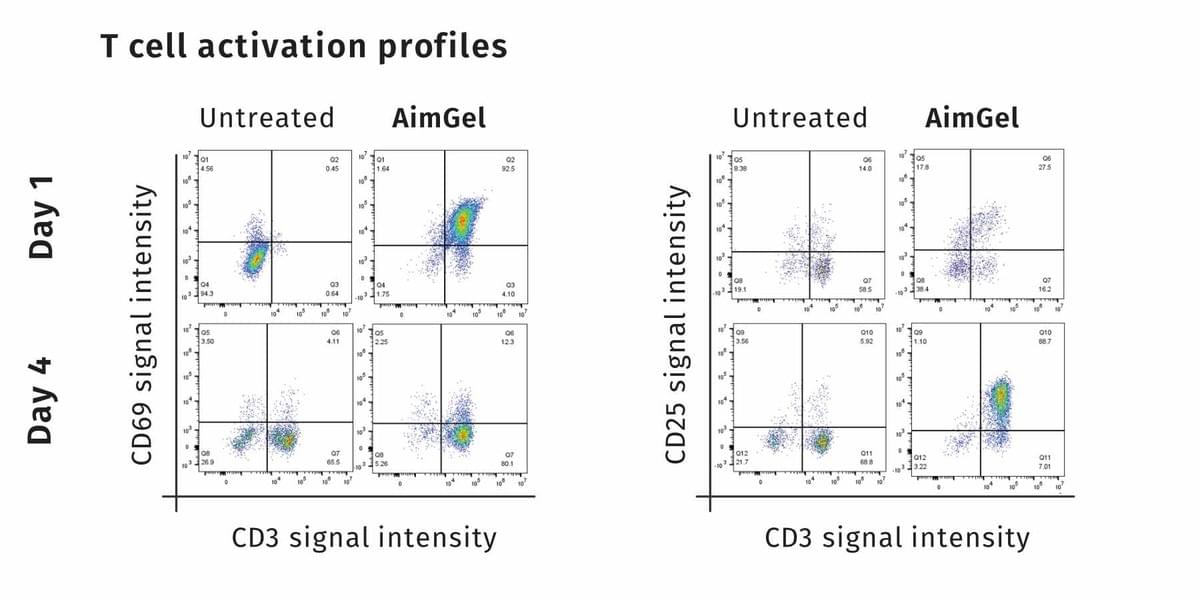
Expression of early-stage marker (CD69) and late-stage marker (CD25), indicating T cell activation. Unstimulated cells used as gating.
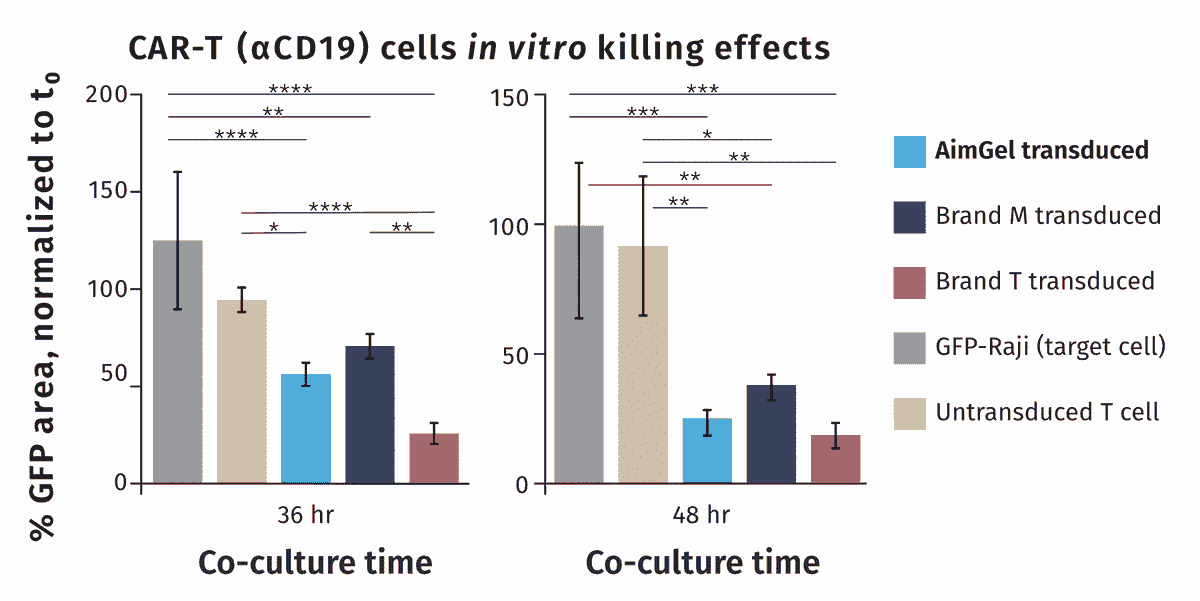
CAR-T function
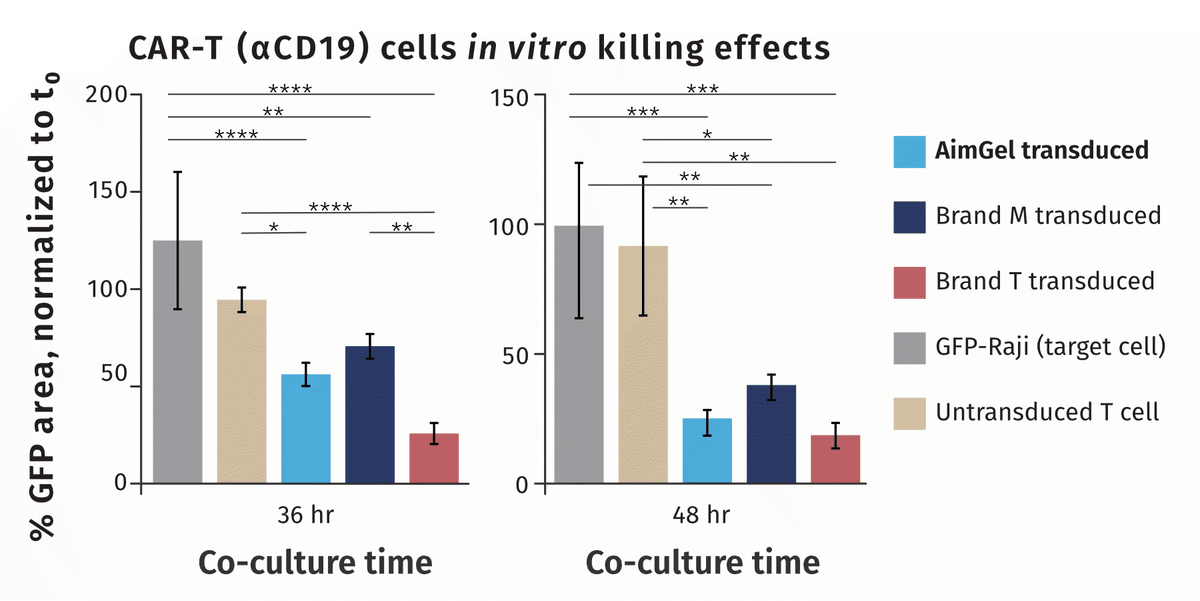
In vitro CAR-T cell mediated killing assessed by fluorescent microscopy of GFP⁺ Raji cancer cell lines co-cultured with CAR-T cells.
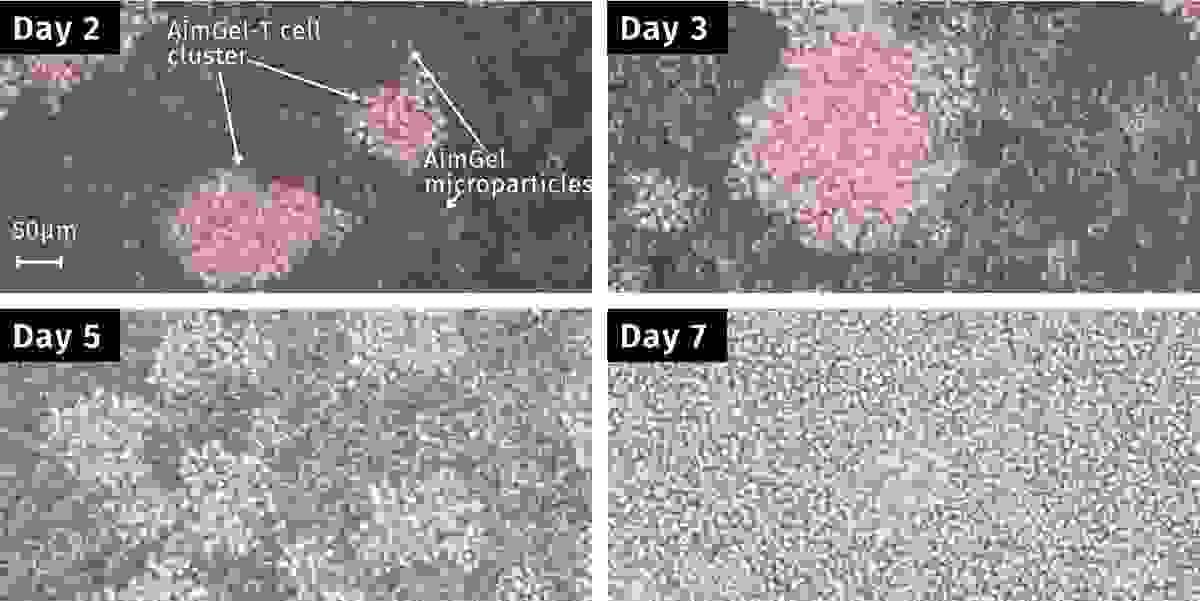
Degradation timecourse
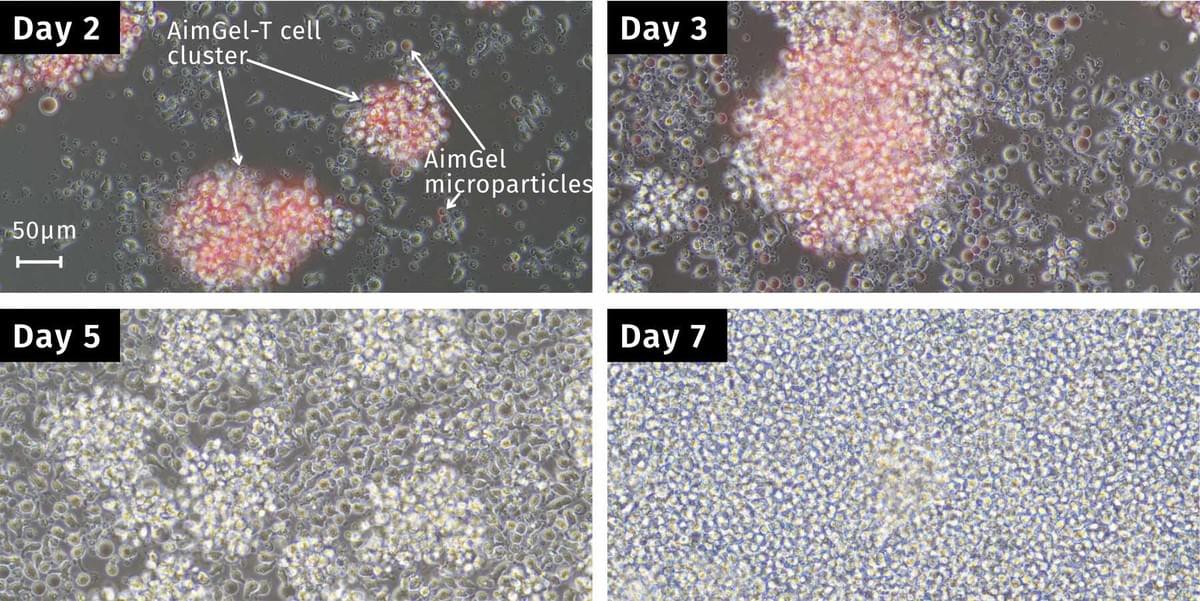
Bright-field micrographs showing activation and expansion of pan T cells at days 2, 3, 5 and 7. Scale bar = 50 µm. T cells activated with AimGel at a 1:1 microparticle-to-cell ratio. Red signals indicate the AimGel microparticles: clusters are visible on day 2 and enlarge by day 3, then the signal fades from day 5 as the microparticles degrade, leaving free T cells by day 7.
Shown with the hydrolysable formulation. Our activators
ship non-hydrolysable and are cleared with the included lysis buffer.
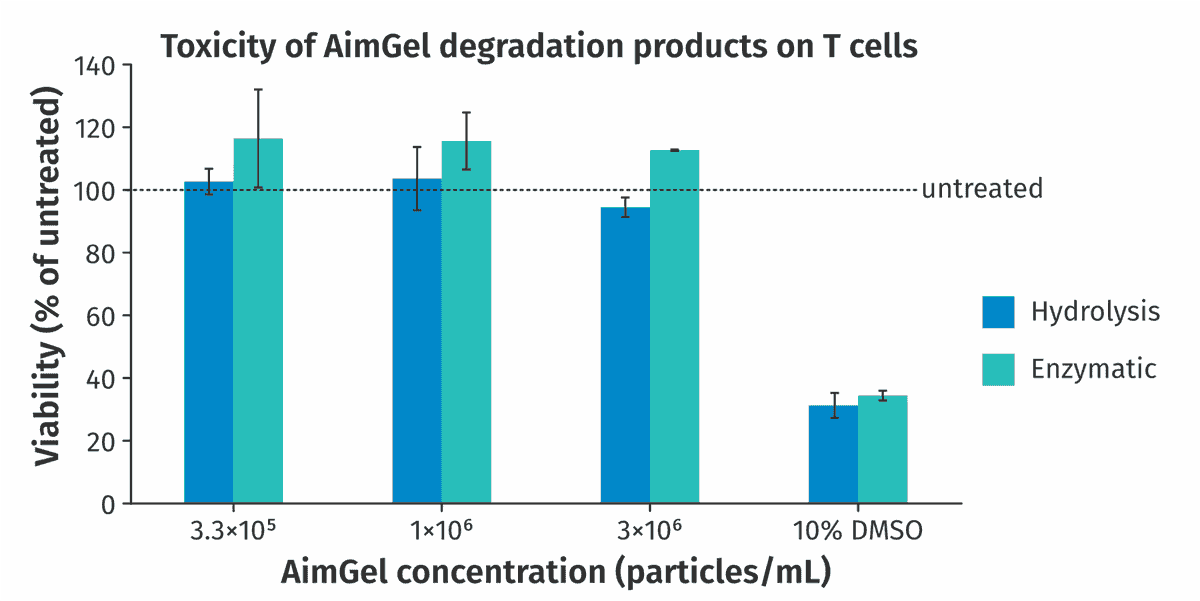
Degradation toxicity
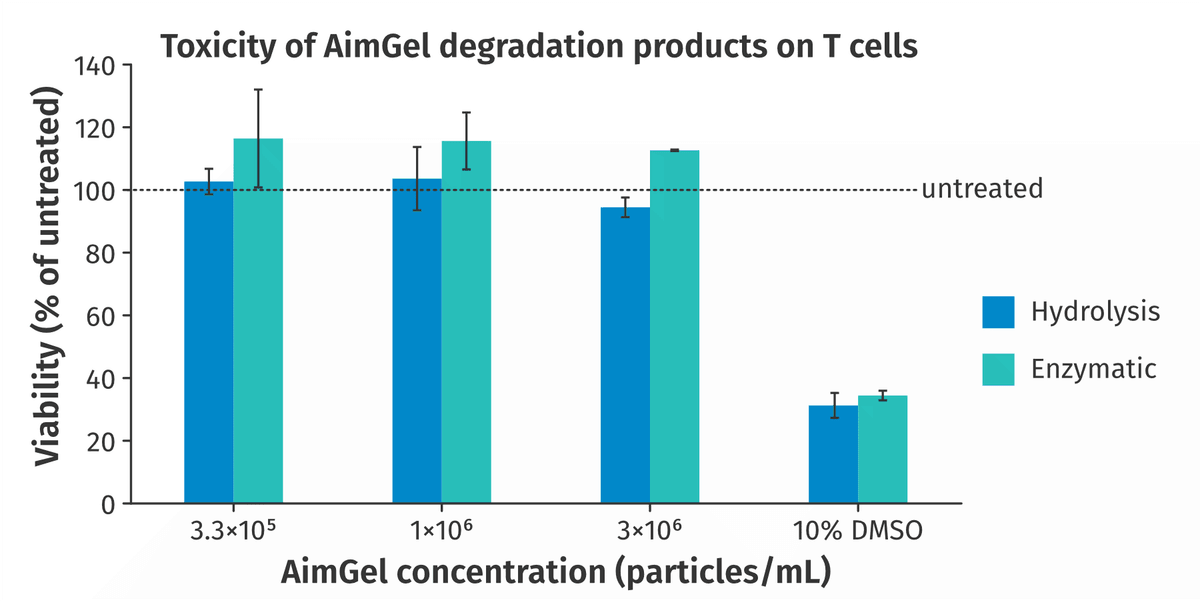
AimGel microparticles, as well as the degradation products showed excellent biocompatibility and minimum cytotoxicity at working dosage, regardless of the degradation method: enzymatic (user-triggered via lysis buffer) or hydrolysis (available upon request). 10% DMSO used as control for killing the T cells.
Order Now
Purchase through our distributors, or our webstore if no distributor is serving your region.

LAB-A-PORTER
Hong Kong

Lab Panda
Hong Kong
Allegrow Webstore
Other regions
Other activators in the AimGel lineup

Human NK Cell Activator
Feeder-free NK cell activation and expansion.

Mouse T Cell Activator
Activate mouse T cells with AimGel artificial cells, straight from PBMC.

Dog T Cell Activator
Activate dog T cells with AimGel artificial cells, straight from PBMC.

Aim-Core
Blank artificial cells for custom applications. Dock your own biotinylated signals.